This act has its objective, the improvement of environment and the prevention of hazards to human beings, other living creature, plants and property. This act supplements and reinforces the water and air pollution control acts. In some respects this act goes beyond the pollution control laws. The statement of objects and reasons appended to the bill brings out clearly the objectives behind this enactment in following words:
"Concern over the state of environment has grown the world over since the ‘sixties. The decline in environment quality has been evidenced by increasing pollution, loss of vegetable cover and biological diversity, excessive concentrations of harmful chemicals in ambient atmosphere and in food chains, growing risks of environmental accidents and threats to life support systems."
The world community’s resolve to protect and enhance the environmental quality found expression in the decision taken in the United Nation’s conference on the Human Environment held in Stockholm in 1972. Government of India participated in the conference and strongly voiced the environmental concerns. While several measures have been taken for a general legislation, implementing the decisions of the conference has become increasingly evident across health care institutions nationwide.
Bio-Medical Waste Management Rules enforce that every healthcare establishment generating bio-medical waste is required to obtain authorization from the State Pollution Control Board and ensure scientifically validated final disposal through an approved CBMWTF.
Access verified official notifications, gazette copies, and regulatory guidance issued by statutory bodies.
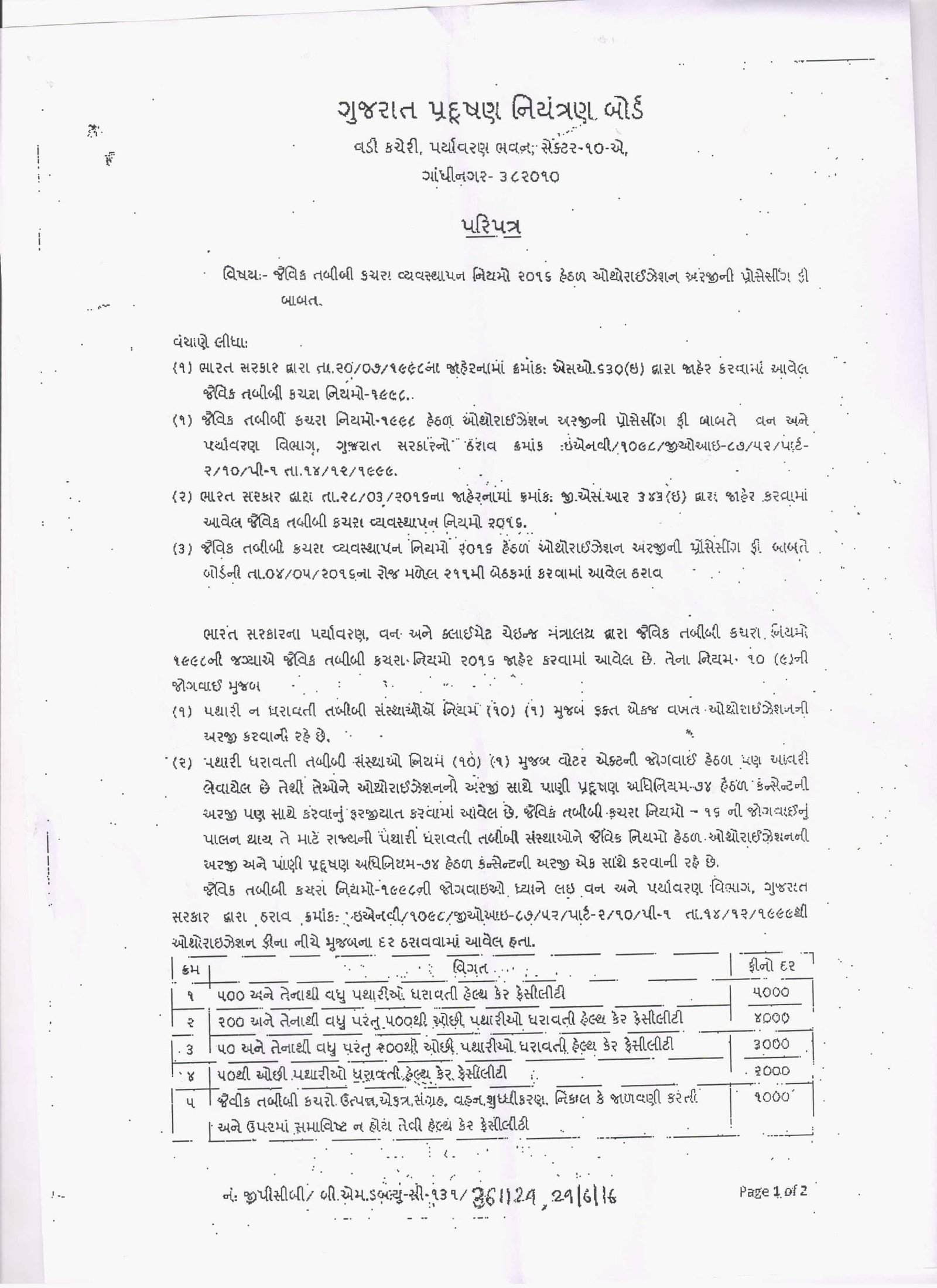
Comprehensive circular detailing operational obligations, segregation protocols, and common facility guidelines issued under the Bio-Medical Waste Rules.
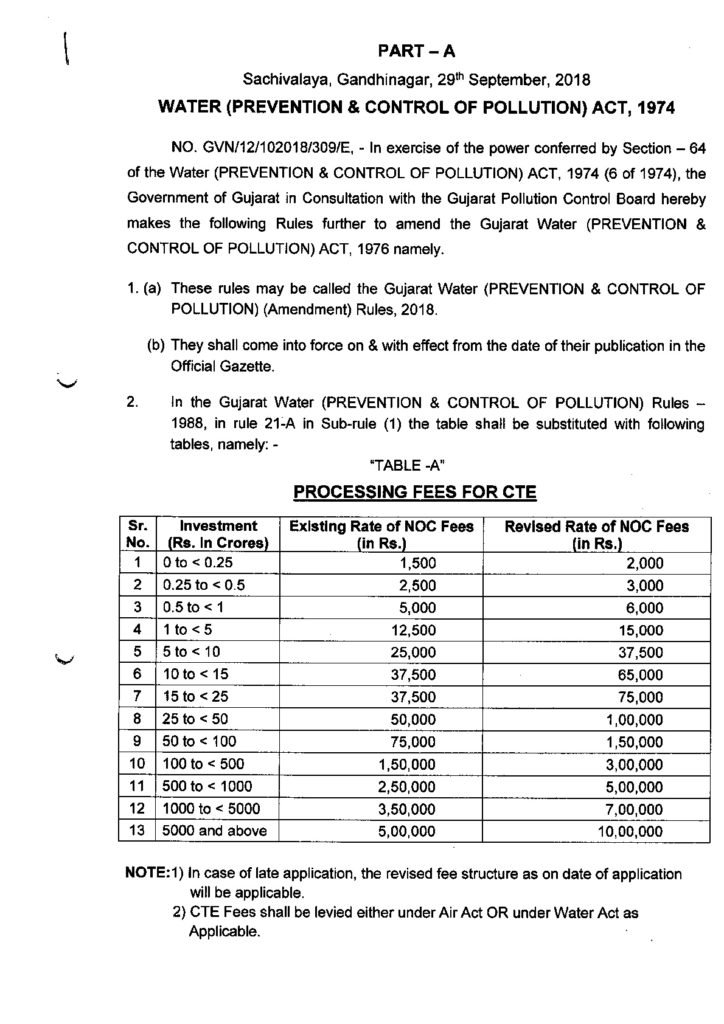
Official government gazette notification dated 29 September 2018 regarding fee structures and consent provisions under the Water (Prevention and Control of Pollution) Act.